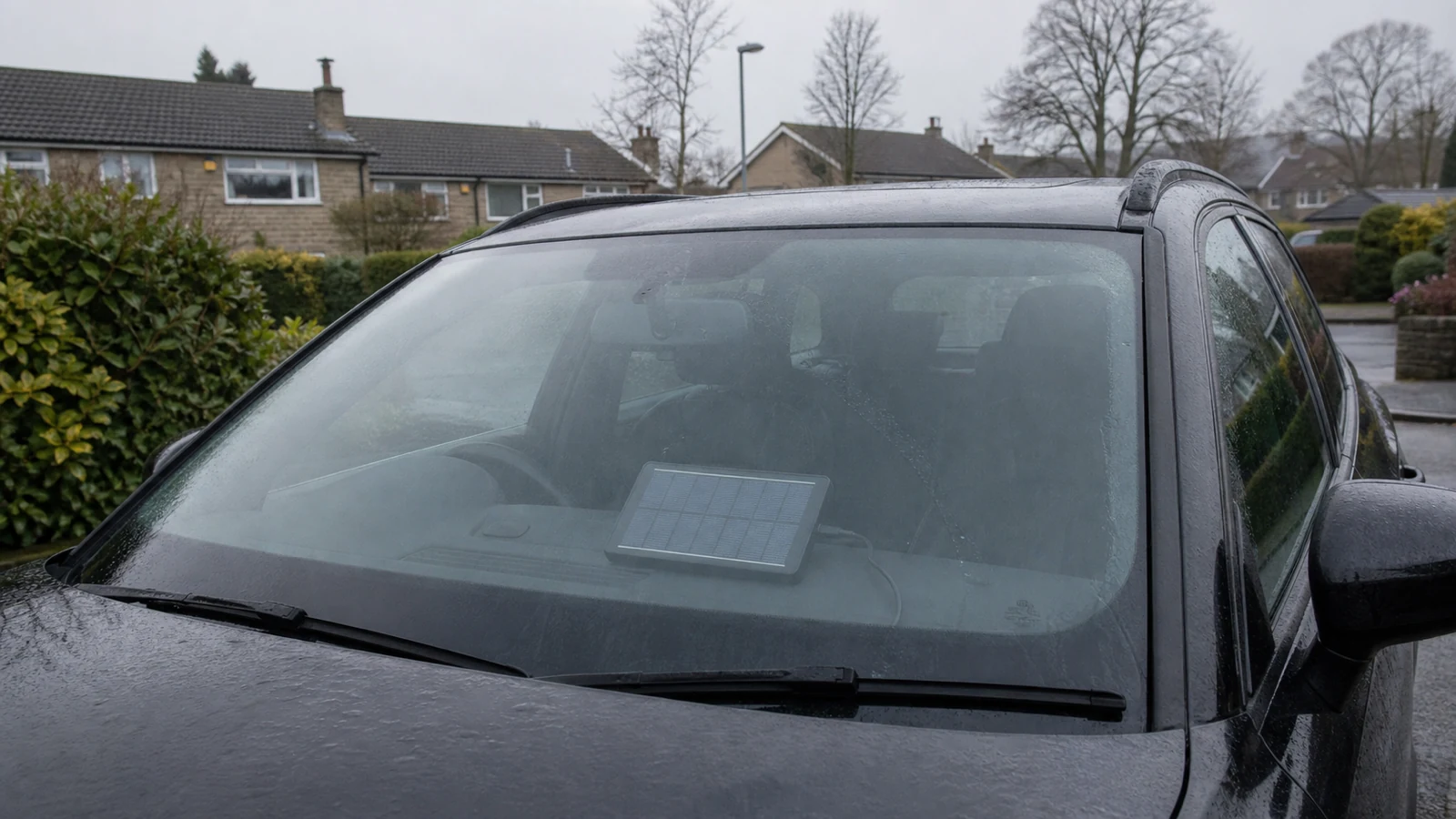
Does Solar Trickle Charger Work In Uk Winter
Direct answer: yes, a solar trickle charger can work in a UK winter for maintaining a healthy battery where daylight reaches the panel. It will produce less in short, grey days and should not be treated as jump-starting or battery recovery equipment.
What “works” means
For winter storage, “works” means helping offset small standby drain over time, not rapidly charging from flat. Dual Action Roadside states that diffuse overcast daylight can still support maintenance, with reduced winter output. Solar Technology also stresses that stored vehicles still need sunlight access. Independent explainers such as Auto Median make the practical trade-off clear: winter and cloud reduce output, and plug-in maintainers can be more dependable in prolonged low light.
Winter diagnostic ladder
- Is the battery healthy and charged now? If not, restore it first.
- Can the panel see sky for part of the day? A north-facing dashboard under shade is a weak setup.
- Is the glass or panel clear of mist, dirt, frost or snow?
- Does your chosen 12V socket stay live with ignition off? If not, use a direct battery connection method instead.
- After a dull week, check whether voltage is holding. Real feedback beats hope.
When to add mains charging
Use a mains smart charger before winter lay-up, after a long period of poor light, or whenever the vehicle must start on a fixed date. Solar maintenance is useful because it is convenient and mains-free; it is not magic in a dark corner.
Who should not rely on solar alone
Do not rely on a solar trickle charger alone for vehicles with high continuous loads, known battery faults, no daylight path, or an already-flat battery. Those cases need diagnosis, a correct charger, or a larger designed charging system.
Sources
Public sources used for technical and safety context are listed in the structured citation record for this article.